
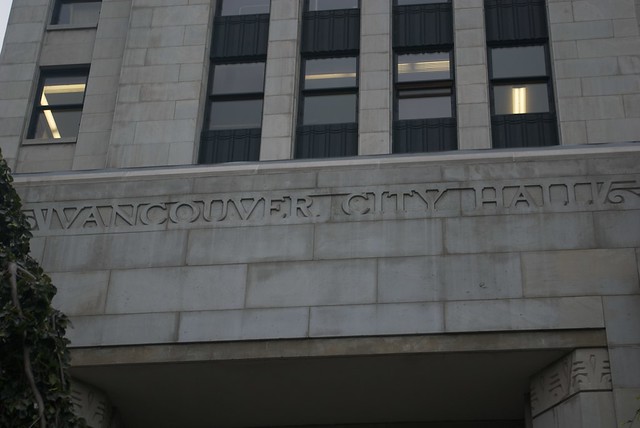
The Vancouver municipal election takes place this Saturday November 19th. Here the editors of the Mainlander present our endorsements for Vancouver City Council, Parks Board, and School Board.
This election should be considered within the context of the past three years. In 2008, Vision Vancouver candidates for City Council ran aggressively against the NPA’s record. But since that time, Vision has continued the NPA’s policy of business tax cuts, gentrification, “ecodensity,” policing the poor, privatization, and cuts to the public service. Previous relationships with community organizations have been severed, rendering city hall even more out-of-touch. Alas, the two developer-funded parties differ less than hairs plucked from the nose of Pinocchio.
Most disturbing is the broken promises. In 2008, Vision appealed to the best in people, and won a strong mandate to tackle unaffordabiliy and homelessness. Unfortunately, developers and the rich 1% remained in the driver’s seat, vetoing any real change of direction. This is disturbing for two reasons: first, it hurts those who need change right now, and second, it taints the chances of more committed people who may come along in the future to make real change — when that happens, who will believe them?
So what is the way forward? Amidst the short-sighted hysteria of election campaigns, which always demand last-minute capitulation to false choices, it’s best to remain calm and take the long-view. When we do that, standing in the eye of the campaign hurricane, new paths reveal themselves. Vancouver is a city where the poor and working-poor, and especially youth, have little future, with nowhere to build a life. It is a real challenge to work multiple jobs, build up one’s community, and at the same time learn the ropes of our government-for-the-rich.
Out of this, however, new lines of demarcation are being drawn up. A line is being drawn between a system rigged for developers and big businesses and one controlled by residents. This time that line is partly obscured by the Vision-COPE electoral alliance, but in the long run ideas are more powerful than temporary opportunities. Of those candidates opposed to the developer-run system, some have been distracted by NIMBY (not-in-my-backyard) concerns. But a few candidates in this year’s race remain focused, exposing the link between lack of democracy and unaffordability. Indeed, the candidates we are endorsing are the ones who show the tip of the iceberg of a movement of renters — the majority of residents, the next generation — intent on speaking for themselves instead of being spoken for.
In the end, through the fog, the choice is clear. A person can support a city based on the principles of equality, justice and liberty, a city that embraces social housing and public schools and public parks across the board; or else go on to build a resort town exclusively for the rich. The space in between those two choices has all but disappeared, and if the historic elections of 2008 Vision held out the possibility of having both at once, that dream has been shattered by reality. Now our stance towards Vision and the NPA has to be the slogan, ‘both are worse,’ and we will not be blackmailed by false distinctions and petty differences. Bikes lanes, backyard chickens, “rent banks” and wheat lawns are not legitimate topics for politics in the most unaffordable city on the planet.
Against this election, we insist that politics is the scene of collective action, based on a number of principles working at a distance from dominant interests. All the more, it has become a pressing task to imagine reaching into the foggy depths of city hall and wrest the commons away from the clutches of privatization. We believe that the Mayoral, Council, Parks and School Board candidates we have nominated will fight towards exactly that.
Our choices, in order of preference:
Mayor |
Helten, Randy
Council |
Woodsworth, Ellen
Louis, Tim
Gill, Lauren
Martin, Terry
Spires, Aaron
Aquino, RJ
Benson, Nicole
Parks |
Brent Granby
Donalda Greenwell-Baker
Stuart Mackinnon
Jamie Lee Hamilton
School |
Jane Bouey
Patty Bacchus
Allan Wong
Ken Clement
Al Blakey
When looking at candidates, we ranked the candidates based on a simple criteria.
First, our priority is the candidate’s history of standing by the principles that got them elected. Too many times have we heard politicians break their promises and hand us an apology whenever the issue is brought up, operating on the principle of ‘ask for forgiveness later.’ When the interests of capital and wealth accumulation mean constant pressure on candidates, whether through invitations to the company yacht, tickets to the Canucks game, or tens of thousands of dollars in campaign contributions, what we need in our councillors is not a Thermidorian spirit but a Jacobin one: unwavering, uncorruptible political will.
Secondly, we based our decision on an acknowledgement and understanding of the issues that effect the majority of Vancouverites each day. There has to be an acknowledgment that we live in perpetual housing crisis, and it should not take yet more homelessness to make us realize this. The wealthy profit hand over fist off the backs of renters who cannot start a family or enjoy and create culture. We based our decisions on solidarity with and representation of the people of Vancouver. Renters, Vancouver’s exploited majority, were prioritized over property owners.
FOR COUNCIL
About half of council decisions involve land-use policy and zoning. Over the next three years, City Council will decide whether or not Vancouver is a livable, affordable socially-inclusive city. It will decide whether or not to support renters or to facilitate evictions. Beyond zoning, it will choose whether to use City resources to house the homeless or provide tax incentives to big businesses. Six seats, a majority on City Hall, means unchecked authority on land-use decisions. This is why developers fight so hard to control this level of government, spending $40 to $50 per vote.
1. Ellen Woodsworth – COPE
Ellen has spent six years on Vancouver City Council and has been by far the most principled and committed councilor. She has passionately supported affordable and social housing at every turn. She has been an essential ally in securing new low-income housing at various sites over the past years, and an equally passionate critic of the destruction of Little Mountain and the sell-off of the Olympic Village. Unique amongst current councilors, she has a wide understanding of the destructive impacts of gentrification — and as a result has courageously and rightly called for a moratorium on condo development in the DTES until existing housing is secured. She has been the strongest defender of renters’ rights and civil liberties when it has really counted, especially during the Olympics. She has been conscientious of the fundamental importance of aboriginal justice. As a matter of philosophy, she has taken her lead from social movements — feminist, environmental, LGBTQ, anti-poverty, social justice — and was instrumental in bringing the World Peace Forum to Vancouver. We would like to say that our criticism of COPE’s electoral alliance with Vision Vancouver is in no way a criticism of COPE, and especially not of Ellen Woodsworth. On the contrary, we are inspired by the hope that Ellen’s democratic principles will soon displace the corrupt, out-of-touch practices that rule today. Not only do we endorse Ellen for Council, but we hope that she tops the polls.
2. Tim Louis – COPE
Tim Louis has also been on council for six years. He is above all a principled politician, consciously inspired by the legacy of his mentor and COPE-founder Harry Rankin — ‘champion of the people against developers and big business.’ The best-known instance of Tim Louis’ stance on the issues must be the historic split between COPE and Vision Vancouver. Despite huge pressure, Tim stood by the democratically decided principles of COPE to favor public options for public services, on COPE’s condition that they be both cheaper and more effective. Tim fought against the expensive public-private partnership for the Richmond-Airport-Vancouver Line, in favor of a more affordable and expansive public transit network. In the past, Louis started the Handy-Dart service, and in this campaign, Tim has committed to fighting for universal bus passes for neighborhoods. This is the kind of unwavering advocacy we need on council. If it had not been for Tim, and the rest of the “COPE Classic” councillors of the 2002 — 2005 term, there would have been nobody on council fighting for accountability from the promises of the Vancouver 2010 Olympics. Tim fought vigorously to have COPE run a mayoral candidate in 2008, knowing before the rest of us that Gregor Robertson would act as a falsely progressive ‘revolving doorway’ for developers at City Hall.
3. Lauren Gill
Lauren Gill is a new and independent candidate, who has been among the most active candidates over the past month, not to mention the last three years. As a mental health worker and tireless housing advocate, Gill fights for social justice literally every day. Campaigning for Gill has meant attending every candidates debate, but also taking to the streets — organizing marches and camping at Occupy Vancouver. Earlier this month, Lauren came in first place in the Vancouver Public Space Network’s “Last Candidate Standing” all-candidates debate, besting everyone from Geoff Meggs to Andrew Reimer. Over the past three years, Lauren has organized with Community Advocates for Little Mountain (CALM), opposing the destruction of 224 perfectly livable social housing units at Little Mountain Housing Complex, as well as with Vancouver Action (VanAct), opposing the privatization of social housing units at the Olympic Village. She is also a long-time volunteer organizer with various women’s organizations in Vancouver’s Eastside.
4. Terry Martin – NSV
Terry sat on the Vancouver Board of Variance for three years, and calls for city-wide neighborhood empowerment. Progressives need someone who understands the inner workings of City Hall and real-estate development. One of our key draws to Terry was his promise to eliminate the ability to waive the 20% inclusionary zoning policy, therefore including affordable housing in every single rezoned development. This is crucial. If you want to build luxury condominiums here, it must come on the condition those who live here and keep the city functioning — the working class — are not displaced. The past three years and the thousands who have attended public hearings have revealed a desperate need for open doors and listening ears in City Hall. If Terry’s term on the Board of Variance was any example, he will listen, think, and decide policy based on what people say at Public Hearings, or as part of consultation processes, and what is right. He is running with Neighbourhoods for a Sustainable Vancouver.
5. Aaron Spires
Aaron is a postal worker and committed housing activist in Vancouver. In his role as a postal worker, he was a key organizer against the Conservative Government’s anti-union legislation of 2011. Aaron placed second in the Vancouver Public Space Network’s “Last Candidate Standing” debate, and for good reason. He is articulate and deeply informed about the affordability crisis which afflicts Vancouver. When working people of Vancouver are asked to pay for the mistakes and excesses of the 1%, Spires calls for the redistribution of wealth for a more equitable and just Vancouver.
6. RJ Aquino – COPE
Aquino has been working with various social justice and education groups, earning widespread respect throughout Vancouver’s Filipino communities. As a young father, he’s in the same boat as many who are struggling in Vancouver to support a family, or support themselves, in the most unaffordable City in the World. He has been quick to tackle the municipal politics learning-curve by engaging community groups and shadowing experienced COPE candidates, especially Ellen Woodsworth. When youth are struggling both to find jobs and to find a place to live, it’s easy for their voices to be drowned out by the old guard of property owning voices, whose economic interests lie in perpetuating the housing crisis. RJ, along with Ellen and Lauren and Aaron, will be the voice of renters on City Council.
7. Nicole Benson – NSV
Nicole Benson is another new and strong voice, whose energy and commitment give us hope. She decided to run for Neighbourhoods for Sustainable Vancouver to “take a stand” against big development companies. She is trained in social justice education, and hopes to implement the principles of participatory democracy.
FOR MAYOR
On the one hand, the mayor has only one vote on council, and so technically holds no more power in creating policy than other councilors. On the other hand, the mayor has a close relationship with the general manager, who runs the day-to-day operations of the city. The mayor sends signals about what to prioritize on a daily basis, and also is responsible for showing leadership in pushing people to make tough decisions.
1. Randy Helten – NSV
Neighbourhoods for a Sustainable Vancouver, though in existence for several years, is for the first time running candidates for office. Although we are falling short of endorsing the entire NSV slate, more out of uneasiness than out of lack of hope, we feel that Randy is the best possible candidate for the job of Mayor. Over the past years, Randy has been fighting against City Hall with residents of the West End and members of the West End Neighbours, but also extending support to low-income residents of the Downtown Eastside on the issue of gentrification. Read our interview with Helten here.
FOR PARKS BOARD
The major issue for Parks Board over the next three years will be resisting privatization of parks and ensuring their accessibility to people of all incomes.
1. Brent Granby – COPE
Brent’s stated priority is to make Vancouver’s parks as accessible as possible to everyone. Brent attends every Parks Board meeting and is the chair of the COPE Park Board caucus. For someone who has yet to be elected, he has high level-understanding and -experience of both Parks Board issues as well as those of council. COPE policy we look forward to seeing implemented once Brent is elected include: the expansion of season farmer’s markets to operate year round, building more washrooms throughout the city, and ensuring our parks don’t become exclusive through fee increases.
2. Stuart Mackinnon – Vancouver Green Party
Over the past three years, Stuart has had the confidence and political will to stand up to dominant voices on Parks Board. With developer-funded parties in control every elected City authority, Stuart’s courageous opposition has been priceless. Stuart spoke out against the privatization of Vancouver parks, the expansion of the Vancouver Aquarium, and other businesses taking over park space. We believe Stuart will continue to stand up against the privatization of Vancouver Parks, which could become an increasing important issue as higher levels of government continue their austerity measures. As a caveat, we disagree with Stuart’s stance on and attitude towards gentrification.
3. Donalda Greenwell-Baker – COPE
Donalda has a strong background working with labour unions, and has served on the COPE executive for almost five years. She has also worked directly for the Vancouver Park Board as a Recreation Supervisor. Whereas many Park Board candidates often treat the job as a farm team for council, Donalda is dedicated to Vancouver parks. She will bring direct, working experience to the park board. In a time when the commons is being passed into private hands, COPE Parks Board Candidates Granby and Greenwell-Baker are calling for more democracy in decisions around public land – most notably in trying to get Hastings Park under the control of elected representatives. This will ensure that as the site is further developed, people of all incomes and backgrounds will have a strong voice.
4. Jamie Lee Hamilton
Jamie has been a vocal opponent of recent cuts to Parks Board budget and to privatization of Vancouver parks, beaches and other public spaces. Jamie Lee Hamilton will work on council to keep Vancouver’s parks publicly-owned and -controlled. Jamie calls for more Parks Board autonomy.
FOR SCHOOL BOARD
The BC Liberals are trying to cut school budgets. It is going to take a strong voice of the city to continue to fight these cuts. For the most part, we have been happy with the school board over the past three years. We fear that electing any NPA School candidates could lead to the closure of more schools. We need to be investing in schools, making them accessible for all, adding services, and using their spaces to build community and create culture, not closing them and redeveloping the land.
1. Jane Bouey – COPE
The easiest endorsements to make for the 2011 election are on school board. Our first pick is Jane Bouey who helped lead the fight against provincial cuts to education by refusing to include them in the budget.
2. Patti Bacchus – Vision Vancouver
Patti was instrumental in the fight against closing down schools. In a time when the BC Liberals, and Christy Clark, have been showing a clear preference for private over public education, Patti refused to implement the BC Liberals’ proposed cuts to the School Board. Bacchus has clearly demonstrated that when Gregor Robertson and the rest of Vision Vancouver capitulates to the savage cuts by the Province, you can still take a stand and defend the public against the privatization of the entire province.
3. Allan Wong – COPE
If elected, this will be Allan’s fourth term as a School Trustee. Wong has been a strong advocate for public education, ESL and Special Needs students. Wong served as chair for the School Board Committee that initiated Vancouver’s seismic upgrades. Wong currently lives in South Vancouver.
4. Gwen Giesbrecht – COPE
As a member of Vancouver District Parent Advisory Council executive, serving two years as Chairperson, Giesbrecht possess a deep analysis of the issues at hand. As an East Vancouver parent of a school-aged child, Giesbrecht is committed to the everyday struggles of her neighborhood’s families. Although Giesbrecht is a new candidate, she will benefit from the experience of the rest of the COPE candidates, and the strength of the COPE platform.
5. Al Blakey – COPE
Al Blakey was first elected on the School Board in 1999 and re-elected three times. Blakey is committed to fighting underfunding instigated by the Province. He has experience to know what works and what doesn’t.
6. Ken Clement – Vision Vancouver
As an incumbent, Clement pledges to continue the School Board’s support for community neighborhood schools, Parent Advisory Councils and building safer spaces and support services for inner-city youth. As urban aboriginal person who attended a residential school, Clement calls for city-wide empowerment of all disenfranchised youth.